
Evaluating the Cross-Border Hair Transplant Sector: An Industry Analysis of FUE Logistics in Brazil
The global landscape of aesthetic medicine is undergoing a significant transformation, with hair restoration emerging as a primary driver of cross-border healthcare. As North American patients increas
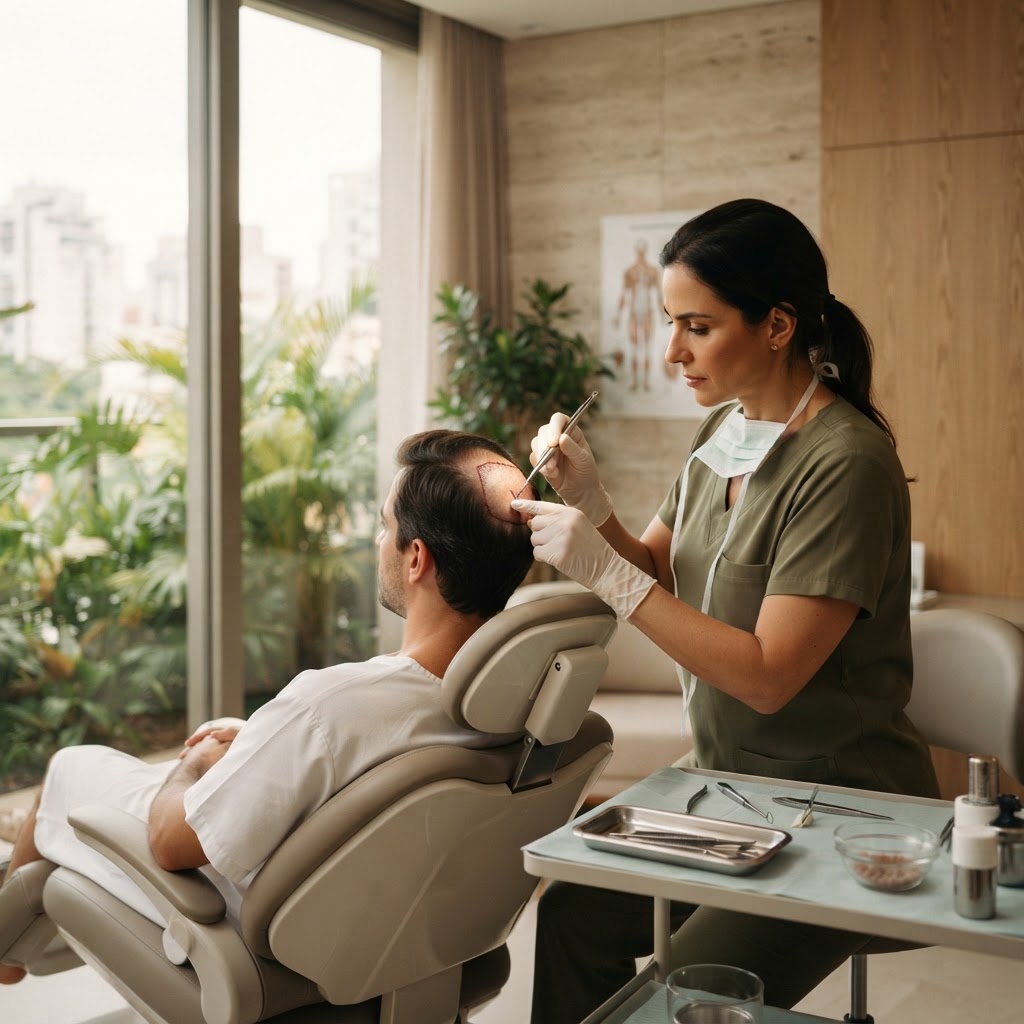
Evaluating the Cross-Border Hair Transplant Sector: An Industry Analysis of FUE Logistics in Brazil
Direct Answer
The hair transplant sector in Brazil represents a rapidly expanding segment of the country's broader medical tourism industry, driven by advanced minimally invasive techniques like Follicular Unit Extraction (FUE) and Direct Hair Implantation (DHI). For US and Canadian patients, navigating this market requires a clear understanding of logistical variables, as Brazilian clinical models typically separate surgical fees from travel and accommodation coordination. Editorial analysis indicates that successfully accessing this market depends on structured logistical planning and a comprehensive understanding of cross-border healthcare economics.
Key Takeaways
- Brazil maintains the largest market share for hair transplants in South America, supported by a robust aesthetic medicine infrastructure.
- The global hair transplant market is experiencing significant growth, with FUE procedures accounting for approximately 73% of all global interventions.
- Unlike some international medical tourism hubs that offer all-inclusive packages, Brazilian clinics generally require patients to manage their own travel, accommodation, and local logistics.
- The Brazilian medical aesthetics market is projected to reach approximately $1,285.2 million by 2031, reflecting a compound annual growth rate of 9.8%.
- North American patients must account for variable cost structures, including the price per graft, facility fees, and extended stay requirements for post-operative monitoring.
- Effective cross-border care requires dedicated coordination to bridge the gap between clinical appointments and international travel logistics.
> Medical Disclaimer: This article is editorial content and does not constitute medical advice. Always consult a qualified healthcare professional for medical guidance.
Introduction
The global landscape of aesthetic medicine is undergoing a significant transformation, with hair restoration emerging as a primary driver of cross-border healthcare. As North American patients increasingly look beyond their domestic borders for specialized procedures, South America—and Brazil in particular—has positioned itself as a focal point for medical travel. According to industry data published by Fortune Business Insights, the global hair transplant market is projected to reach $54.90 billion by 2034, expanding at a compound annual growth rate of 22.10%.
Within this expanding global framework, Brazil's role is particularly noteworthy. The country has long been recognized for its established aesthetic medicine sector, but the specific growth in hair restoration highlights a shift in patient demographics and technological adoption. Editorial analysis suggests that for US and Canadian patients, the appeal of Brazil lies in its combination of highly specialized medical professionals and a mature healthcare infrastructure. However, accessing this market requires a nuanced understanding of international logistics, cost variances, and the specific operational models of Brazilian clinics.
The Landscape
To understand the hair transplant sector in Brazil, one must first examine the broader context of the country's medical aesthetics industry. According to a report by MarketsandMarkets, the Brazil medical aesthetics market was valued at approximately $712 million in 2025 and is projected to reach $1,285.2 million by 2031. This growth is fueled by an expanding middle class, heightened awareness of advanced treatment options, and the proliferation of specialized clinics across major urban centers.
Furthermore, Market Research Future notes that Brazil remains the largest market for hair transplants in South America, reflecting a strong cultural acceptance of aesthetic procedures. This established domestic demand has created a highly competitive environment for medical professionals, driving the adoption of advanced technologies and refined surgical techniques. For the international patient, this means entering a market that is already operating at a high volume, which necessitates careful navigation and logistical support to identify appropriate specialists and coordinate the complex variables of cross-border travel.
Analyzing the Shift Toward Minimally Invasive Techniques
The evolution of hair restoration technology has fundamentally altered patient expectations and clinical offerings. Historically, the industry relied heavily on Follicular Unit Transplantation (FUT), a method involving the removal of a strip of scalp. Today, the market has shifted decisively toward minimally invasive procedures. According to data from Estenove Intelligence, Follicular Unit Extraction (FUE) now accounts for 73% of all global hair transplant procedures, while Direct Hair Implantation (DHI) accounts for 18%, and FUT has declined to just 9%.
In Brazil, this technological shift is a primary driver of market growth. As noted by DHI International, the Brazilian market is heavily influenced by patient demand for natural-looking results and procedures that minimize surgical trauma and recovery time. FUE involves extracting individual follicular units directly from the donor area, while DHI utilizes a specialized implanter for direct follicle placement, allowing for precise control over the angle and depth of implantation.
Editorial analysis indicates that the prevalence of these advanced techniques in Brazil makes the country an attractive destination for North American patients. However, the reliance on meticulous, time-intensive procedures like FUE and DHI means that clinical capacity is often limited, and scheduling requires significant advance planning. Patients must coordinate their travel timelines to align with the availability of specialized surgical teams, adding a layer of logistical complexity to the medical travel experience.
The Economics of Hair Restoration: Cost Structures and Logistical Variables
When evaluating the economics of cross-border hair restoration, it is critical to look beyond the base surgical fee. The cost of a hair transplant is typically calculated on a per-graft basis, which can vary significantly depending on the technique used, the geographic location of the clinic, and the specific infrastructure of the facility.
A comparative analysis published by Hermest Clinic highlights a crucial distinction between the Brazilian market and other international hubs like Turkey. While some regions have built their medical tourism industries around all-inclusive packages that bundle the surgical fee with hotels, airport transfers, and translators, Brazilian clinics generally operate on a decentralized model. In Brazil, the quoted price for a hair transplant typically covers only the clinical components: the surgeon's fee, facility costs, and medical supplies.
Editorial analysis reveals that this decentralized model requires US and Canadian patients to independently manage their logistical budgets. Patients must account for international airfare, extended hotel stays for pre-operative consultations and post-operative monitoring, local transportation in major cities like São Paulo or Rio de Janeiro, and potential translation services. Consequently, while the clinical costs in Brazil may be competitive, the total expenditure is highly variable and depends entirely on the patient's logistical choices and coordination efficiency.
Navigating Cross-Border Coordination for North American Patients
The logistical pathway for a North American patient seeking a hair transplant in Brazil involves multiple phases of coordination. The initial phase requires identifying clinics that maintain high standards of hygiene, utilize modern technology, and possess a track record of transparent communication, as highlighted by DHI International.
Once a clinical destination is selected, the logistical focus shifts to travel and accommodation. Brazil's major urban centers are well-connected to North America via direct flights, but navigating the local infrastructure requires planning. According to Hermest Clinic, patients traveling to Brazil for hair transplants often need to arrange their own hotels and local transport, which can increase the complexity of the trip compared to destinations that offer bundled medical tourism packages.
Furthermore, the recovery timeline dictates the duration of the stay. While FUE and DHI are minimally invasive, patients are generally advised to remain in the country for several days post-procedure to attend follow-up appointments and ensure that the initial healing phase progresses without complications. Editorial analysis emphasizes that structuring this pathway—aligning flight dates with clinical availability, securing appropriate accommodations near the medical facility, and planning for comfortable local transit during the immediate recovery period—is essential for a streamlined cross-border experience.
What This Means for You
For US and Canadian patients researching hair restoration options, the Brazilian market offers access to a mature aesthetic sector utilizing advanced techniques like FUE and DHI. However, the decentralized nature of Brazilian clinical pricing means that successful medical travel requires rigorous logistical planning and coordination.
Aesthetica Health provides non-clinical coordination and network access to help North American patients structure their medical travel to Brazil. We offer two distinct pathways for logistical support:
- Network Access ($149): This tier provides patient intake, matching, and access to our curated network of specialists in Brazil. (Note: Consultation fees are separate and paid directly to the provider).
- Concierge Access ($499): This comprehensive tier includes everything in Network Access, plus a dedicated online concierge, a comprehensive case planning call, and full consultation coordination to streamline your logistical pathway. (Note: Consultation fees are separate).
By utilizing a structured coordination platform, patients can focus on their travel and recovery while navigating the complexities of the cross-border healthcare economy.
FAQ
What techniques are most common for hair transplants in Brazil?
According to global industry data, Follicular Unit Extraction (FUE) and Direct Hair Implantation (DHI) are the most prevalent techniques, favored for their minimally invasive nature and natural-looking results.
Do Brazilian clinics offer all-inclusive medical tourism packages?
Generally, no. Unlike some other international destinations, Brazilian clinics typically charge for the clinical procedure alone. Patients are usually responsible for coordinating and funding their own flights, accommodations, and local transportation.
How long should I plan to stay in Brazil for a hair transplant?
While the procedure itself is typically completed in one day, patients must account for pre-operative consultations and post-operative follow-ups. A stay of several days to a week is often necessary to accommodate the clinical schedule and initial recovery phase.
Does Aesthetica Health provide medical advice or clinical guarantees?
No. Aesthetica Health is a non-clinical coordination and network access platform. We do not provide medical advice, diagnose conditions, or guarantee clinical outcomes. All medical decisions should be made in consultation with a qualified healthcare professional.



American Standards.
Brazilian Mastery.
Aesthetica Medical Travel Facilitators, LLC is an international care coordination company registered in Wyoming, United States. We provide services for the promotion and support of medical service providers, including physicians worldwide (“medical service providers”). These services are made available through Aesthetica’s website, and the same privacy terms also apply to the Aesthetica Advisor Program (the “application/platform”), created and operated by Aesthetica. Aesthetica is solely responsible for controlling and processing the information obtained via the platform or through other communications between users, businesses, hospitals, clinics, or third parties and members of the Aesthetica service team (the “Service Team”). Our services may include non-clinical care coordination for North American patients seeking elective procedures abroad, including provider matching, travel logistics, and administrative support throughout the care journey. Additional services or add-ons may be offered depending on the selected scope. Post-operative care is typically conducted in the destination country where the procedure is performed. Additional coordination or administrative support in the patient’s country of origin may be available separately, subject to scope and availability. Aesthetica may engage third-party service providers, partners, or affiliated entities to support its operations, including data processing and service delivery. Information may be shared with such parties solely as necessary to provide the services described. Our operations follow strict standards of transparency, privacy protection, and regulatory compliance. Testimonials reflect individual experiences and do not guarantee future results. By using Aesthetica’s services or platform, users acknowledge and agree to these terms and understand the limited, non-clinical role of Aesthetica in the care journey. For more information about our policies or compliance framework, please contact our support team.