
The Economics of Dental Tourism: Analyzing Veneers and Implants Logistics in Brazil
The landscape of cross-border healthcare is undergoing a structural shift, with dental tourism emerging as a primary driver of international patient mobility. For patients in the United States and Can
The Economics of Dental Tourism: Analyzing Veneers and Implants Logistics in Brazil
Direct Answer
Dental tourism in Brazil represents a rapidly expanding sector of cross-border healthcare, driven by North American patients seeking complex restorative and cosmetic procedures like veneers and implants. By leveraging advanced clinical technologies and favorable economic variances, international patients coordinate comprehensive smile makeovers while navigating logistical frameworks distinct from domestic care.
Key Takeaways
- The Brazilian dental tourism sector is experiencing significant economic expansion, with projections indicating a market volume of USD 1,301.7 million by 2033.
- North American patients typically observe cost variances ranging from 37% to 75% for procedures such as implants and veneers compared to domestic pricing.
- Advanced technological integration, including CAD/CAM systems and 3D digital scanning, facilitates efficient treatment timelines for international travelers.
- Regulatory oversight by entities such as ANVISA ensures that sterilization and clinical protocols align with international standards.
- Structuring a cross-border dental pathway requires meticulous logistical planning, encompassing initial digital consultations, travel coordination, and post-operative maintenance.
- Non-clinical coordination platforms assist patients in navigating provider networks, managing language barriers, and organizing travel logistics.
> Medical Disclaimer: This article is editorial content and does not constitute medical advice. Always consult a qualified healthcare professional for medical guidance.
Introduction
The landscape of cross-border healthcare is undergoing a structural shift, with dental tourism emerging as a primary driver of international patient mobility. For patients in the United States and Canada, the economic realities of domestic dental care often present substantial barriers to accessing comprehensive restorative and cosmetic treatments. According to industry data highlighted by Discover Affordable Dental Work in Brazil; Top Dentist And Clinics, dental work—including cleanings, fillings, and root canals—costs the most in the US among all G7 countries.
This economic pressure has catalyzed a migration toward international markets that offer sophisticated clinical infrastructure alongside favorable pricing models. Brazil has positioned itself as a central hub within this global network, attracting patients seeking veneers, dental implants, and full smile makeovers. Editorial analysis: The convergence of highly trained specialists, advanced digital dentistry, and a robust tourism infrastructure makes Brazil a compelling case study in the modern medical travel economy. This article analyzes the logistical, economic, and regulatory frameworks defining the dental tourism pathway in Brazil.
The Landscape
The global dental tourism market is characterized by rapid expansion and increasing patient demand. According to the Dental Tourism Market Size Forecast Analysis Report 2026-2030, the global market size is projected to grow from $7.3 billion in 2025 to $8.2 billion in 2026, representing a compound annual growth rate (CAGR) of 12.3%. This growth is historically attributed to high domestic treatment costs, long waiting times, and the increasing accessibility of global travel.
Within this global context, Brazil's regional market is demonstrating exceptional momentum. Data from the Brazil Dental Tourism Market Outlook, 2033 indicates that the dental tourism market in Brazil is expected to reach a projected revenue of USD 1,301.7 million by 2033, expanding at a compound annual growth rate of 19.9%. Editorial analysis: This outpaced growth rate suggests that Brazil is capturing a larger share of the international patient demographic, transitioning from a regional healthcare destination to a global competitor in the dental sector. Patients are increasingly traveling for high-value services, including dental implants, periodontics, endodontics, and dental cosmetics.
Analyzing Cost Differentials and Economic Drivers
The primary catalyst for the cross-border movement of dental patients is the substantial economic variance between North American and South American healthcare markets. According to Dental Work in Brazil | Safe & Affordable | Save 70% on the US Prices, international patients can observe savings ranging from 37% to 75% on procedures such as dental implants (including all-on-4, 6, or 8 configurations), veneers, crowns, and dentures when compared to pricing in the US and Canada.
Editorial analysis: These cost differentials are not indicative of compromised clinical standards, but rather reflect broader macroeconomic factors. The favorable exchange rate between the US Dollar or Canadian Dollar and the Brazilian Real significantly amplifies purchasing power. Furthermore, the operational costs of running a clinical practice—including commercial real estate, administrative staffing, and domestic liability insurance—are structurally different in Brazil, allowing providers to offer competitive pricing while maintaining profitability.
Prices for procedures are highly variable and depend on the complexity of the case, the materials selected, and the specific geographic location of the clinic within Brazil. For instance, Medical tourism in Brazil — TOP Clinics & Costs 2026 notes that diagnostic procedures like a CT of the mandible may range around $170, while tooth extractions and whitening can range from $180 to $250. Patients must approach these figures as estimates and ranges, recognizing that comprehensive smile makeovers require individualized clinical assessments to determine final costs.
Technological Infrastructure and Clinical Standards
A critical component of Brazil's success in the dental tourism sector is the widespread adoption of advanced clinical technologies. To attract and retain international patients, Brazilian clinics have invested heavily in digital dentistry and premium materials. According to Discover Affordable Dental Work in Brazil; Top Dentist And Clinics, modern facilities frequently utilize advanced technology such as CEREC and CAD-CAM systems, which allow for precise, computer-guided dental restorations.
The integration of on-site dental laboratories and 3D digital scanning (such as NemoScan) facilitates highly efficient treatment timelines. Medical tourism in Brazil — TOP Clinics & Costs 2026 highlights that clinics utilize zirconia implants and international brands for precision treatment. Furthermore, Dental Work in Brazil | Safe & Affordable | Save 70% on the US Prices reports the use of recognized international implant brands such as Straumann, Nobel, and Neodent.
Editorial analysis: The utilization of globally recognized materials is a strategic logistical advantage. Should a North American patient require maintenance or adjustments upon returning home, domestic dentists are generally familiar with these international implant systems, ensuring continuity of care across borders.
Navigating Safety and Regulatory Frameworks
For international patients, understanding the regulatory environment of the destination country is a fundamental aspect of logistical planning. In Brazil, clinical safety and sterilization protocols are strictly monitored. According to Dental Work in Brazil | Safe & Affordable | Save 70% on the US Prices, reputable clinics utilize sterilization processes approved by ANVISA (the Brazilian Health Regulatory Agency) to disinfect laboratory instruments and surgical equipment.
Additionally, professional oversight is maintained by organizations such as the Federal Council of Medicine (CFM) and the Brazilian Medical Association, which recognize specific board certifications, as noted in Medical tourism in Brazil — TOP Clinics & Costs 2026.
Beyond clinical safety, patients must also coordinate their general travel security. Discover Affordable Dental Work in Brazil; Top Dentist And Clinics advises international travelers to remain aware of their surroundings, avoid informal housing developments, and enroll in the Smart Traveler Enrollment Program (STEP) for security alerts provided by the US State Department. Editorial analysis: Comprehensive medical travel requires a dual focus on both clinical due diligence and standard international travel precautions, ensuring a secure environment throughout the duration of the stay.
Structuring the Cross-Border Dental Pathway
The logistical execution of a dental tourism journey requires structured phasing, often beginning weeks or months before the patient boards a flight. According to Discover Affordable Dental Work in Brazil; Top Dentist And Clinics, the pathway typically initiates with a digital consultation where patients share their treatment needs and receive a personalized treatment plan.
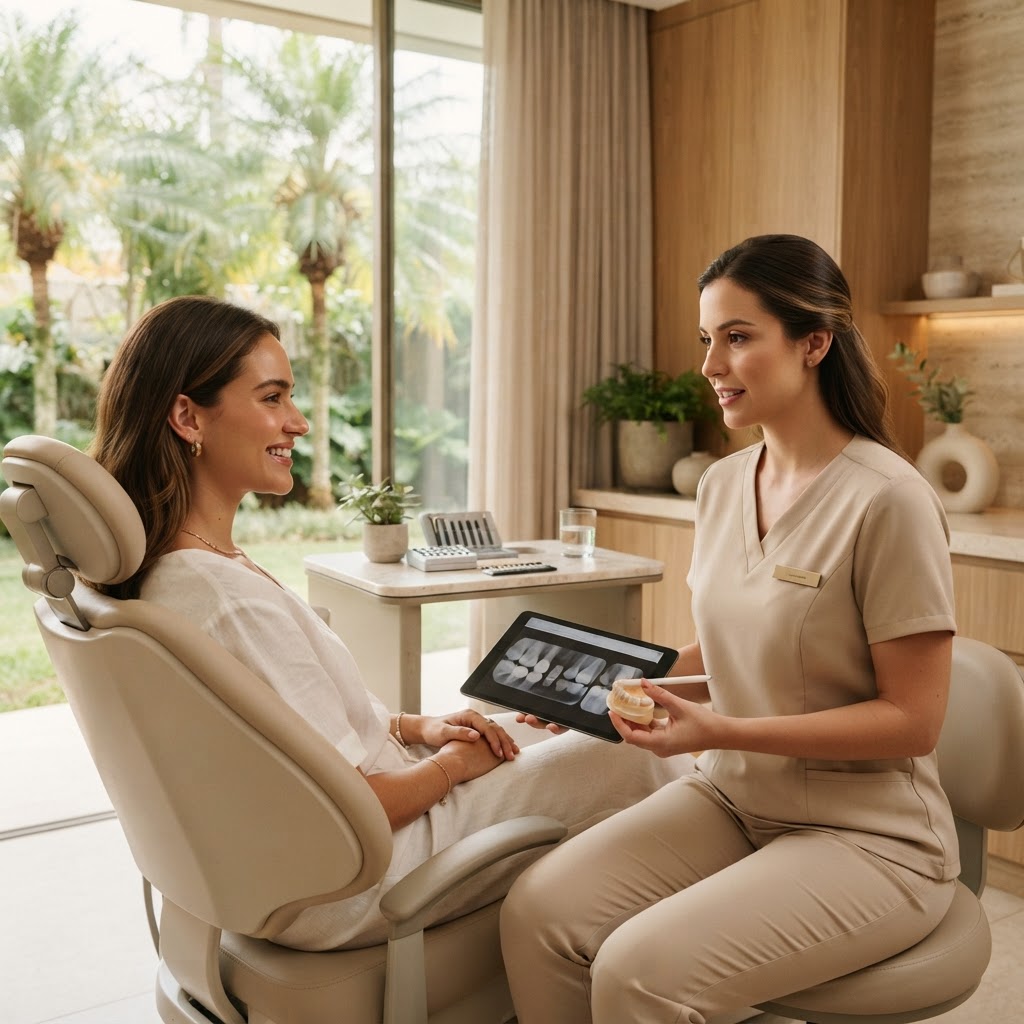
Upon arrival in Brazil, the initial clinical visit generally involves comprehensive diagnostics, including dental X-rays and 3D digital scans to create precise models of the teeth. Some clinics offer specialized logistical models, such as a "Dental Spa Day," which aims to consolidate treatments into a highly efficient, single-day format utilizing on-site laboratories and CAD-CAM technology.
Editorial analysis: The timeline for dental tourism is highly dependent on the specific procedure. While some veneer applications or crown restorations can be completed in a matter of days, complex implant procedures (such as bone grafting or multi-stage implant placement) may require multiple trips to Brazil spaced several months apart to allow for proper osseointegration. Patients must factor the cost of multiple flights and accommodations into their overall economic analysis when planning multi-stage procedures.
What This Means for You
Coordinating a cross-border dental pathway involves managing complex variables, from evaluating clinic infrastructure to organizing international logistics. Aesthetica Health operates as a premium, non-clinical coordination platform designed to streamline this process for US and Canadian patients seeking dental tourism in Brazil.
We offer structured pathways to assist patients in navigating the logistical landscape. Our Network Access ($149) provides initial intake, matching, and access to our curated network of providers (consultation fees are separate). For patients requiring comprehensive logistical support, our Concierge Access ($499) includes everything in the Network Access tier, plus a dedicated online concierge, a comprehensive case planning call, and full consultation coordination.
Aesthetica Health is not a clinic or medical provider; we do not provide medical advice, rank doctors clinically, or guarantee outcomes. Our role is to provide the logistical framework and network access necessary for you to make informed, independent decisions regarding your cross-border dental care.
FAQ
What drives the cost difference for dental procedures between North America and Brazil?
The cost variance is primarily driven by macroeconomic factors, including favorable exchange rates between North American currencies and the Brazilian Real, as well as lower domestic operational and administrative costs in Brazil. Editorial analysis: This allows clinics to offer competitive pricing while utilizing the same international materials found in the US and Canada.
How long does a smile makeover take when traveling to Brazil?
Timelines vary significantly based on the clinical requirements. According to Veneers Clinics in Brazil — Prices & Packages 2026, some veneer installations may require a stay of approximately 6 days. However, complex implant procedures may require multiple visits spaced months apart.
What regulatory bodies oversee dental clinics in Brazil?
Clinical standards, including sterilization and equipment safety, are regulated by ANVISA (the Brazilian Health Regulatory Agency). Professional credentials and board certifications are overseen by entities such as the Federal Council of Medicine (CFM) and the Brazilian Medical Association.
Do Brazilian dental clinics use the same materials as US dentists?
Yes, many clinics catering to international patients utilize globally recognized brands. According to Dental Work in Brazil | Safe & Affordable | Save 70% on the US Prices, clinics frequently use international implant brands such as Straumann, Nobel, and Neodent, ensuring compatibility for future maintenance in the patient's home country.


American Standards.
Brazilian Mastery.
Aesthetica Medical Travel Facilitators, LLC is an international care coordination company registered in Wyoming, United States. We provide services for the promotion and support of medical service providers, including physicians worldwide (“medical service providers”). These services are made available through Aesthetica’s website, and the same privacy terms also apply to the Aesthetica Advisor Program (the “application/platform”), created and operated by Aesthetica. Aesthetica is solely responsible for controlling and processing the information obtained via the platform or through other communications between users, businesses, hospitals, clinics, or third parties and members of the Aesthetica service team (the “Service Team”). Our services may include non-clinical care coordination for North American patients seeking elective procedures abroad, including provider matching, travel logistics, and administrative support throughout the care journey. Additional services or add-ons may be offered depending on the selected scope. Post-operative care is typically conducted in the destination country where the procedure is performed. Additional coordination or administrative support in the patient’s country of origin may be available separately, subject to scope and availability. Aesthetica may engage third-party service providers, partners, or affiliated entities to support its operations, including data processing and service delivery. Information may be shared with such parties solely as necessary to provide the services described. Our operations follow strict standards of transparency, privacy protection, and regulatory compliance. Testimonials reflect individual experiences and do not guarantee future results. By using Aesthetica’s services or platform, users acknowledge and agree to these terms and understand the limited, non-clinical role of Aesthetica in the care journey. For more information about our policies or compliance framework, please contact our support team.