
Pre-Travel Document Checklist for US and Canadian Patients Traveling to Brazil for Medical Care
Essential checklist for US and Canadian patients traveling to Brazil for medical care, including visa updates, passport requirements, and medical documentation.
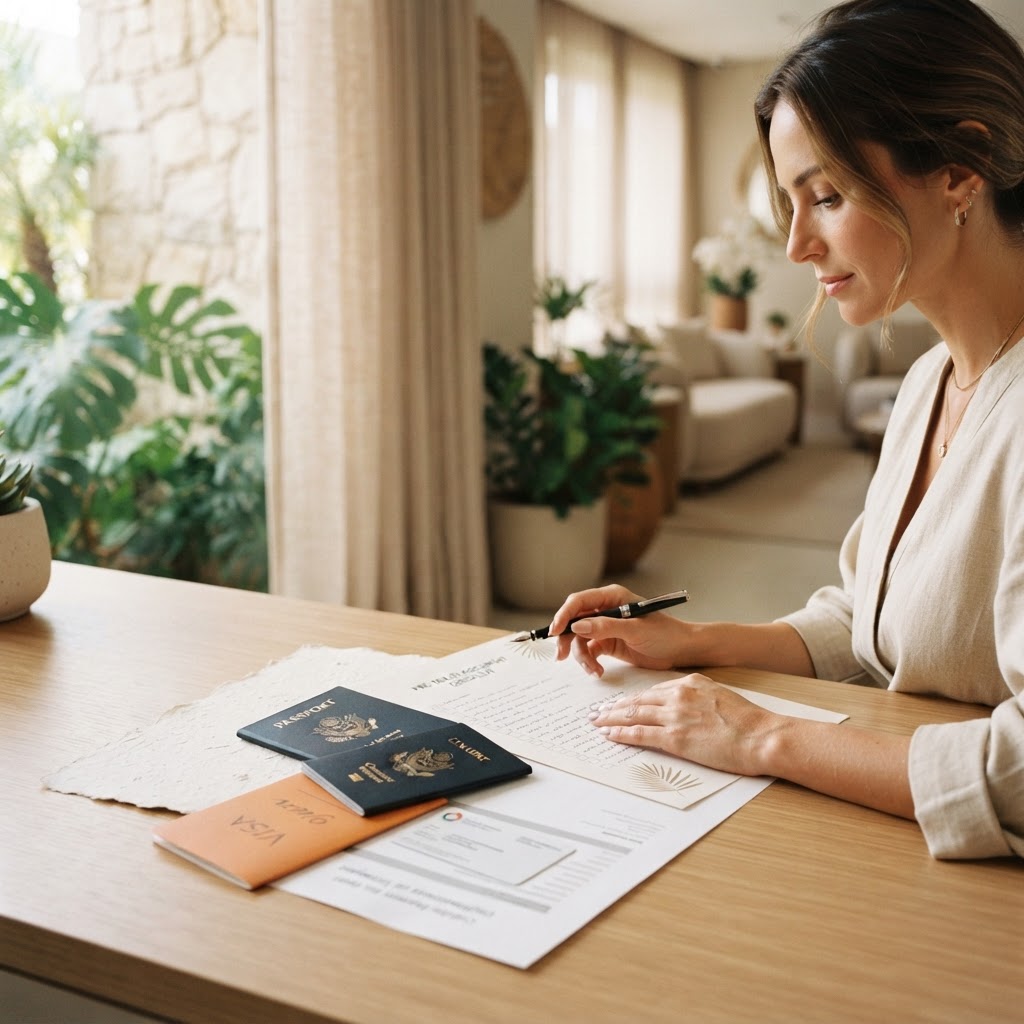
Pre-Travel Document Checklist for US and Canadian Patients Traveling to Brazil for Medical Care
Direct Answer
Traveling to Brazil for medical care requires assembling a specific set of documents before departure, including a valid passport, an e-visa (required as of April 10, 2025), relevant medical records, and documentation for any medications you plan to bring. Failing to prepare these documents in advance can cause delays at customs, complications with your care team, or unexpected logistical challenges. This checklist is designed to help US and Canadian patients understand what to gather before they travel.
---
Key Takeaways
- A valid passport with at least six months of remaining validity beyond your travel date is required for entry into Brazil.
- US and Canadian citizens will be required to obtain a Brazilian e-visa beginning April 10, 2025, according to the Brazilian Ministry of Foreign Affairs.
- For medical stays under 90 days, a standard Visitor Visa (VIVIS) is generally the appropriate visa category — a separate "medical visa" is not typically required.
- The Brazilian National Health Surveillance Agency (ANVISA) regulates the entry of medications; travelers must carry original prescriptions with their medications.
- A Portuguese translation of your prescription is recommended to avoid delays at customs.
- International health insurance or medical travel insurance is strongly recommended by the U.S. Department of State, as many Brazilian facilities may require proof of coverage or advance payment.
- Carrying physical and digital copies of your medical history, recent lab results, and allergy list is advisable when working with a new care team abroad.
---
Introduction
Planning a medical trip abroad involves considerably more preparation than a typical leisure journey. For US and Canadian patients considering care in Brazil, the documentation requirements span immigration, healthcare coordination, medication compliance, and insurance — and the consequences of gaps in that paperwork can be significant.
This article provides an informational overview of the key documents typically required or recommended for patients traveling to Brazil for medical purposes. It is intended to support your planning process and help you ask the right questions of the relevant authorities and professionals.
Disclaimer: This article is editorial content and does not constitute medical advice. It is provided for general informational purposes only. Always consult with a qualified healthcare provider regarding your specific medical situation, and verify all immigration and regulatory requirements with the appropriate government agencies before travel.
---
Put your planning assumptions into a budget
Use the Aesthetica calculator to organize medical, accommodation, flight and support costs with your own quotes. Its example amounts are illustrative, not a price offer.
Definitions and Context
Before working through the checklist itself, it is helpful to understand a few key terms and institutions that are relevant to this topic:
- ANVISA (Agência Nacional de Vigilância Sanitária): The Brazilian National Health Surveillance Agency, which regulates the import of medications and health-related products into Brazil. Their guidelines govern what medications travelers may bring and under what conditions.
- VIVIS (Visitor Visa): The standard visa category issued by the Brazilian Ministry of Foreign Affairs for short-term visitors, including those traveling for medical treatment, provided their stay does not exceed 90 days.
- CFM (Conselho Federal de Medicina): The Federal Council of Medicine in Brazil, the regulatory body that oversees the ethical and professional standards of all physicians practicing in the country. All licensed doctors in Brazil must be registered with a Regional Medical Council (CRM).
- E-Visa: An electronically processed visa that replaces the prior visa-free entry arrangement for US and Canadian citizens. Brazil's Ministry of Foreign Affairs confirmed that this requirement was postponed to April 10, 2025.
- Medical Travel Insurance: Specialized insurance coverage designed for individuals traveling internationally to receive healthcare, distinct from standard travel insurance policies, which may exclude elective or planned medical procedures.
---
1. Passport and Visa Requirements
Your passport is the foundational document for any international journey, and Brazil's entry requirements are specific.
Passport Validity
Brazil requires a valid passport for entry, and it is broadly recommended that your passport carry at least six months of validity beyond your intended travel date. If your passport is approaching expiration, allow sufficient lead time for renewal, as US and Canadian passport agencies can experience processing delays.
E-Visa Requirement
Brazil has confirmed that it will reintroduce visa requirements for citizens of the United States, Canada, and Australia, with implementation scheduled for April 10, 2025, according to the Brazilian Ministry of Foreign Affairs. Prior to this date, US and Canadian citizens could enter Brazil without a visa for short stays. After this date, travelers will need to apply for and obtain an e-visa before departure.
It is important to check the current status of this requirement directly with the Brazilian consulate or Itamaraty (Brazil's Ministry of Foreign Affairs) as policies can evolve.
The Right Visa Category
For medical travel lasting fewer than 90 days, the Visitor Visa (VIVIS) is generally the appropriate category, provided the traveler is not receiving payment from a Brazilian source. There is no separate "medical treatment visa" required for most standard medical travel scenarios of this duration. (Source: Ministry of Foreign Affairs of Brazil, Itamaraty)
---
2. Medical Records and Health History Documentation
One of the most frequently overlooked categories in pre-travel preparation is the organization of your own medical documentation. A Brazilian care team working with you for the first time will need context about your health history to work effectively and safely.
What to Prepare
- A current summary of your relevant medical history, ideally prepared or reviewed by your primary care physician
- Recent laboratory results or diagnostic imaging, particularly those relevant to the procedure or consultation you are seeking
- A complete list of current medications, including dosages and prescribing physicians
- A documented list of known allergies, including drug allergies and reactions
- Contact information for your home-based physician or care team
Format Recommendations (editorial analysis)
Carrying both a physical copy (printed) and a digital copy (stored securely, such as in a password-protected cloud folder or on a USB drive) provides redundancy in case one is lost or inaccessible. Some patients also find it useful to prepare a one-page medical summary document they can hand directly to a new provider.
---
3. Medication Documentation Under ANVISA Regulations
If you take prescription medications and plan to travel with them, Brazilian customs regulations require specific documentation. ANVISA, which oversees health surveillance for imported health products, has established clear guidelines for personal-use medications brought into the country.
ANVISA Requirements
Under ANVISA regulations, travelers may bring medications for personal use provided those medications are accompanied by a valid prescription that corresponds to the quantity needed for the duration of the stay. (Source: ANVISA – Bringing Medication into Brazil)
Recommended Documentation Package
- The original prescription from your prescribing physician
- An invoice or receipt of purchase from the dispensing pharmacy
- Medications kept in their original packaging with the original pharmacy label intact
- A Portuguese translation of the prescription — while not always strictly mandatory, this translation is strongly recommended to avoid delays or questions at customs
Controlled Substances
If any of your medications are classified as controlled substances in the United States or Canada, additional scrutiny at customs should be anticipated. ANVISA regulations require that the prescription specifically identify these medications, and travelers carrying controlled substances should be particularly thorough in their documentation. It is advisable to contact the Brazilian consulate in advance if you have any uncertainty about a specific medication's classification in Brazil.
---
4. Health Insurance and Financial Documentation
The U.S. Department of State strongly recommends that travelers to Brazil obtain international health insurance or specialized medical travel insurance before departing. This recommendation stems from the fact that many Brazilian hospitals and facilities may require proof of insurance or advance payment before delivering non-emergency services. (Source: U.S. Department of State – Brazil International Travel Information)
Documents to Carry
- Your health insurance card and a printed copy of your policy documents, including coverage limits and emergency contact numbers
- If you have purchased a medical travel insurance policy, carry the policy number, provider contact, and a summary of what is covered
- A credit card or documentation of financial means may also be requested at some facilities
It is important to review your existing health insurance policy carefully before travel. Many standard US and Canadian health insurance plans do not cover procedures performed outside the country, particularly elective ones. Consulting with your insurance provider prior to booking travel is a prudent step.
---
5. Vaccination and Health Entry Requirements
Yellow Fever Vaccination
The CDC and WHO recommend yellow fever vaccination for travelers visiting certain regions of Brazil. While it is not currently a mandatory entry requirement for travelers arriving directly from the United States or Canada, the recommendation status can shift based on regional outbreak conditions, and travelers arriving from yellow-fever-endemic countries may face stricter requirements. (Source: CDC – Health Information for Travelers to Brazil)
Carrying your International Certificate of Vaccination or Prophylaxis (ICVP), commonly known as the "yellow card," is advisable even when not formally required, as it provides evidence of vaccination status if requested.
General Health Consultation
Before any international medical trip, scheduling a pre-travel health consultation with a travel medicine specialist or your primary care provider is a common recommendation from health authorities. This is not a document you need to carry, but it may generate documentation — such as vaccination records or updated prescriptions — that should be added to your travel file.
---
6. Emergency Contact and Legal Documentation
This category of documentation is frequently overlooked but can be critically important in unfamiliar circumstances.
Recommended Documents
- A list of emergency contacts at home, including a trusted family member or friend who has knowledge of your travel plans
- Copies of any powers of attorney or healthcare proxy documentation relevant to medical decision-making, if applicable
- Contact information for the nearest US or Canadian consulate or embassy in Brazil
- A copy of your travel itinerary, including accommodation addresses and contact information for any facilities you plan to visit
---
The Aesthetica Evaluation Framework
At Aesthetica Health, we assist US and Canadian patients in navigating the coordination layer of medical travel to Brazil — connecting patients with specialists within our curated network and providing structured support throughout the planning process.
Our coordination services are designed to reduce the logistical burden on patients who may be unfamiliar with Brazilian healthcare systems, documentation requirements, and communication protocols. We do not provide medical advice, clinical recommendations, or treatment guidance, and we do not represent any specific clinical outcome.
Our service tiers include:
- Network Access — $149: Covers intake, matching, and access to our specialist network. Consultation fees are separate and arranged independently.
- Concierge Access — $499: Includes everything in Network Access, plus a dedicated online concierge, comprehensive case planning support, and consultation coordination. Consultation fees remain separate.
Document preparation is one area where our concierge team provides orientation — helping patients understand what materials are typically requested, how to organize them, and when to have them ready. This is informational and logistical support, not clinical guidance.
---
Hypothetical Scenarios
The following scenarios are entirely illustrative and hypothetical. They are presented to help contextualize how documentation gaps can create real-world complications.
Scenario A — The Medication Delay
Imagine a traveler from Ontario who takes a prescription medication daily and arrives in São Paulo without the original packaging or a prescription copy. Brazilian customs officials, operating under ANVISA protocols, ask for documentation. Without the original prescription or invoice, the medication is held for secondary inspection, creating a delay and significant stress on the first day of travel. A Portuguese-translated prescription and original packaging would have streamlined this encounter considerably.
Scenario B — The Insurance Gap
A patient from Florida arrives for a planned consultation at a private hospital in Rio de Janeiro and is informed at check-in that the facility requires proof of insurance or advance payment before the consultation can proceed. The patient's standard US health plan does not cover international procedures. Without a supplemental travel health insurance policy or sufficient financial documentation on hand, the appointment is delayed. Carrying insurance documents and understanding coverage scope in advance would have prevented this disruption.
---
Implications for the Reader
Document preparation for medical travel to Brazil is not a bureaucratic formality — it directly affects the smoothness of your entry into the country, your ability to access care, and your safety while abroad. Patients who invest time in building a comprehensive document file before departure consistently encounter fewer logistical obstacles.
The requirements outlined in this article reflect current guidance from ANVISA, the US Department of State, the CDC, and Brazil's Ministry of Foreign Affairs. However, regulations can and do change, and each traveler's situation — including their specific medications, medical history, and intended procedures — may introduce additional requirements. Verifying all requirements with the relevant authorities before finalizing travel plans is essential.
---
Next Steps
Use this checklist as a starting point for your pre-travel document preparation:
- [ ] Verify your passport's expiration date and confirm at least six months of validity beyond your travel date
- [ ] Research and apply for the Brazilian e-visa well in advance of your travel date (required as of April 10, 2025)
- [ ] Gather relevant medical records, recent lab results, and a comprehensive medication list
- [ ] Request prescription copies for all medications you plan to travel with and arrange Portuguese translations
- [ ] Confirm that all medications are in original packaging with pharmacy labels
- [ ] Review your health insurance policy for international coverage and consider a supplemental medical travel insurance policy
- [ ] Obtain and carry your yellow fever vaccination certificate (ICVP) if applicable
- [ ] Compile emergency contacts, consulate information, and a copy of your travel itinerary
- [ ] Store digital copies of all documents in a secure, accessible location
- [ ] Consult with your home-based physician before travel to address any outstanding health questions
---
FAQ
Q: Do I need a specific "medical visa" to have a procedure in Brazil?
A: Generally, no. For medical stays lasting fewer than 90 days, the standard Visitor Visa (VIVIS) is the appropriate category, provided the traveler is not receiving income from a Brazilian source. There is no separately designated "medical treatment visa" for most cases of this duration. (Source: Ministry of Foreign Affairs of Brazil, Itamaraty)
Q: What documentation do I need to bring my prescription medications into Brazil?
A: ANVISA recommends travelers carry the original prescription, an invoice or receipt of purchase, and medications in their original packaging. A Portuguese translation of the prescription is also strongly recommended to minimize potential delays at customs. (Source: ANVISA – Bringing Medication into Brazil)
Q: Is a yellow fever vaccination certificate required to enter Brazil from the US or Canada?
A: It is not currently a mandatory entry requirement for travelers arriving directly from the US or Canada, though the CDC and WHO recommend vaccination for travel to most regions of Brazil. Requirements may apply to travelers arriving from other yellow-fever-endemic countries. Requirements can change, so confirming current status with the CDC and Brazilian consulate before travel is advisable. (Source: CDC – Health Information for Travelers to Brazil)
Q: Should I bring my medical records from home?
A: Yes. Carrying both physical and digital copies of your relevant medical history, recent diagnostic results, and a list of known allergies allows your Brazilian care team to work with full context. This is a widely recommended practice for any patient receiving care from a provider who does not have access to their existing medical file. (Editorial analysis)
Q: How important is international health insurance for medical travel to Brazil?
A: The U.S. Department of State strongly recommends international health insurance or medical travel insurance for all travelers to Brazil, noting that many Brazilian hospitals require proof of coverage or advance payment before delivering non-emergency care. Standard US and Canadian health plans often do not extend coverage to international procedures. Reviewing your existing policy and considering supplemental coverage before departure is prudent. (Source: U.S. Department of State – Brazil International Travel Information)
---
This article was prepared by the Aesthetica Health editorial team for informational purposes only. It does not constitute medical, legal, or immigration advice. All regulatory requirements should be verified directly with the relevant government agencies prior to travel. Aesthetica Health is a non-clinical coordination and network access platform and is not a medical provider.
Your next step with Aesthetica
Discuss destination, timing and budget questions with an Aesthetica Planner before choosing access. This is non-clinical planning; consultation terms and availability are confirmed before scheduling.
YOUR AESTHETICA PLAN
What could your journey cost?
Explore the travel budget calculator. Organize procedure quotes, flights, accommodation and coordination costs around your own assumptions.
Build my travel budgetNo email required to use the calculator. Example amounts are illustrative, not a quote. Medical advice comes from your treating professional.



International Standards.
Brazilian Mastery.
Aesthetica Medical Travel Facilitators, LLC is an international care coordination company registered in Wyoming, United States. We provide services for the promotion and support of medical service providers, including physicians worldwide (“medical service providers”). These services are made available through Aesthetica’s website, and the same privacy terms also apply to the Aesthetica Advisor Program (the “application/platform”), created and operated by Aesthetica. Aesthetica is solely responsible for controlling and processing the information obtained via the platform or through other communications between users, businesses, hospitals, clinics, or third parties and members of the Aesthetica service team (the “Service Team”). Our services may include non-clinical care coordination for patients worldwide seeking elective procedures abroad, including provider matching, travel logistics, and administrative support throughout the care journey. Additional services or add-ons may be offered depending on the selected scope. Post-operative care is typically conducted in the destination country where the procedure is performed. Additional coordination or administrative support in the patient’s country of origin may be available separately, subject to scope and availability. Aesthetica may engage third-party service providers, partners, or affiliated entities to support its operations, including data processing and service delivery. Information may be shared with such parties solely as necessary to provide the services described. Our operations follow strict standards of transparency, privacy protection, and regulatory compliance. Testimonials reflect individual experiences and do not guarantee future results. By using Aesthetica’s services or platform, users acknowledge and agree to these terms and understand the limited, non-clinical role of Aesthetica in the care journey. For more information about our policies or compliance framework, please contact our support team.