
Avoid Unqualified Cosmetic Surgeons Abroad: 2026 Guide

An unqualified cosmetic surgeon is any practitioner performing surgical procedures without recognized board certification in plastic surgery, regardless of the country where they operate. Thousands of Americans travel abroad each year for procedures like rhinoplasty, liposuction, and breast augmentation, often saving 50–70% compared to U.S. prices. The savings are real. So are the risks. To avoid unqualified cosmetic surgeons abroad, you need to verify credentials independently, recognize warning signs before you book, and plan your recovery as carefully as you plan your flight. Organizations like the International Society of Aesthetic Plastic Surgery (ISAPS) and accreditation bodies like Joint Commission International (JCI) give you the tools to do exactly that.
How to verify cosmetic surgeon credentials abroad
Credential verification is the single most protective step you can take before booking surgery overseas. The process is straightforward, but it requires going beyond a clinic’s website.
Step 1: Confirm board certification in plastic surgery. Only trust surgeons with recognized board certification in plastic surgery or dermatology. Weekend courses are inadequate preparation for complex surgical work. In many countries, any general practitioner can legally call themselves a “cosmetic doctor” without completing a plastic surgery residency. Search the surgeon’s name directly on the ISAPS member directory or the national plastic surgery board of the country where you plan to operate.
Step 2: Check the American Board of Plastic Surgery and state medical boards. If a surgeon trained in the U.S. or holds dual credentials, check disciplinary records through the American Board of Plastic Surgery and the relevant state medical board. These databases reveal malpractice history and license suspensions that clinic websites will never disclose.
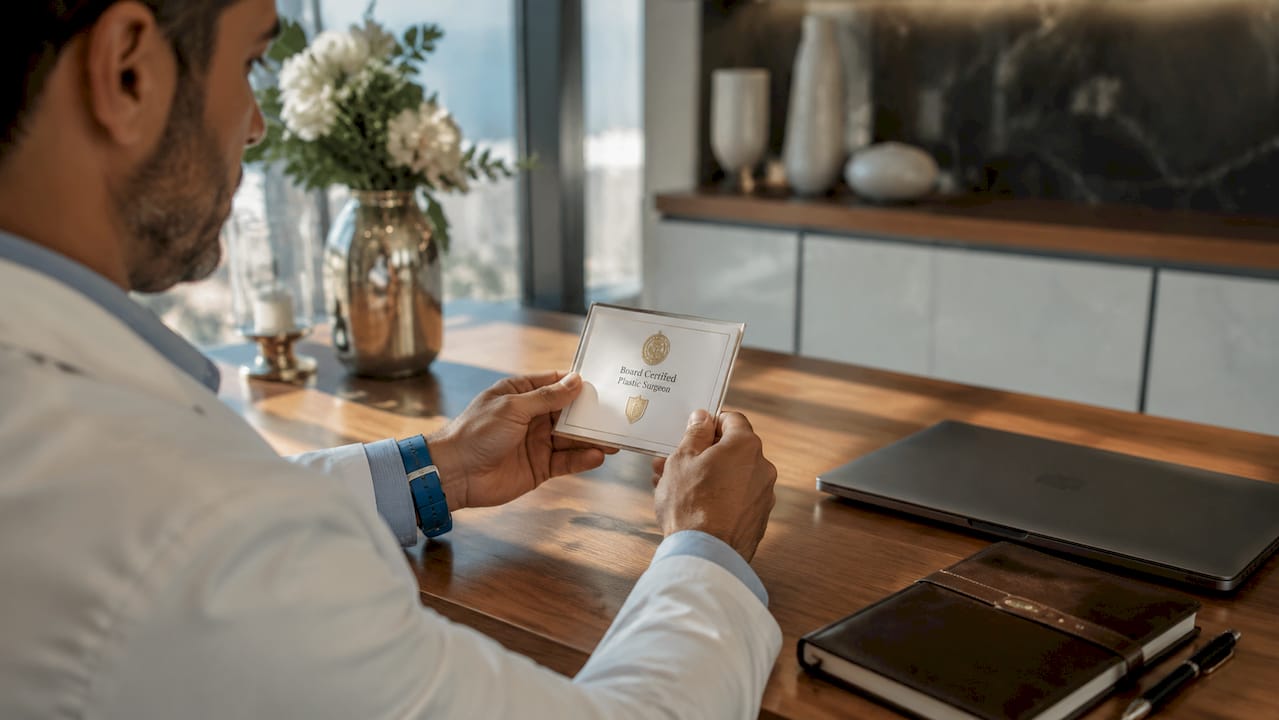
Step 3: Verify facility accreditation independently. JCI accreditation must be verified on the official JCI website, not from a logo on a clinic’s homepage. Clinics have been known to display outdated or fabricated accreditation badges. Go to jointcommissioninternational.org and search the facility name directly.
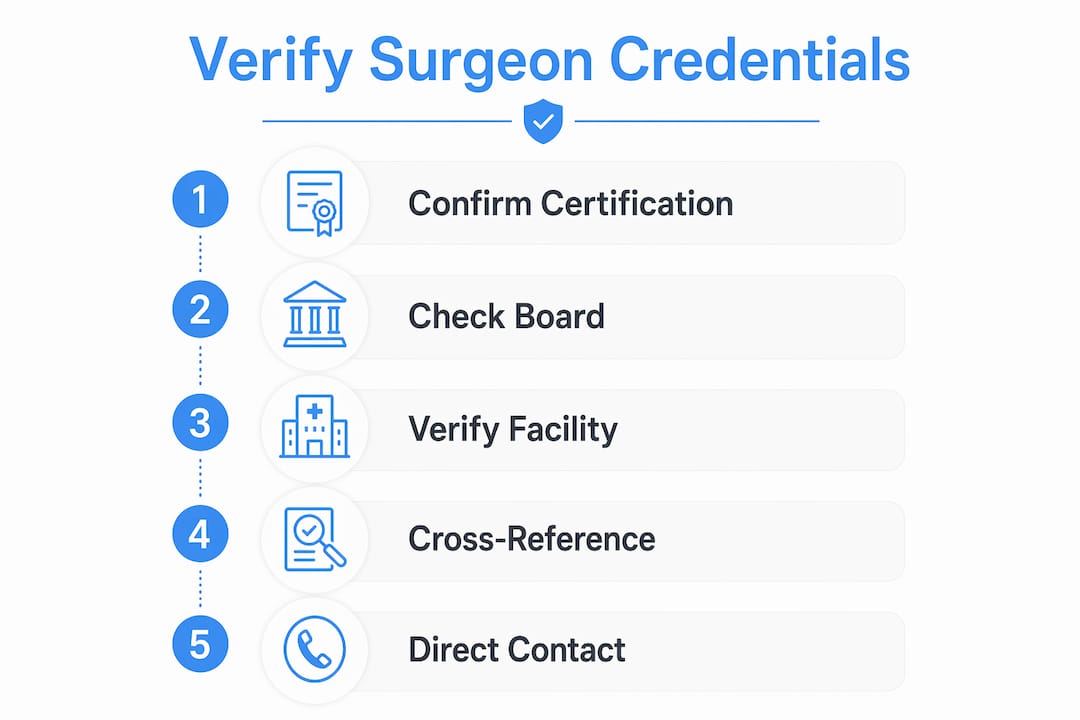
Step 4: Cross-reference surgeon information. Clinic websites that hide surgeon names, use unverifiable awards, or post ghostwritten reviews are a serious warning sign. Search the surgeon’s name on Google, LinkedIn, and PubMed. A legitimate plastic surgeon typically has a professional profile, published work, or conference participation you can verify independently.
Step 5: Demand direct contact with your surgeon before booking. Patients must insist on direct surgeon communication for informed consent. Any facilitator or agency that blocks direct surgeon access is prioritizing bookings over your safety.
Pro Tip: Ask the surgeon to send you a copy of their board certification and hospital privileges letter. Legitimate surgeons provide this without hesitation. If they refuse or deflect, walk away.
What red flags signal an unqualified surgeon overseas?
Recognizing red flags before you commit is the fastest way to protect yourself. The warning signs below are consistent across multiple destinations and procedure types.
- Prices far below market rate. Board-certified surgeon expertise defines safety, not destination. A rhinoplasty that costs $12,000 in the U.S. and $1,500 abroad from an unknown provider is not a deal. It is a risk transfer.
- High-pressure booking tactics. Legitimate surgeons do not offer “limited-time discounts” or pressure you to confirm within 24 hours. Urgency is a sales tactic, not a medical one.
- No written complication plan. Every reputable surgeon provides a written protocol for managing post-operative complications. If a clinic cannot produce one, they are not prepared to handle emergencies.
- No hospital or ICU privileges. Surgeons without hospital privileges who operate only in office-based settings have no emergency backup. If something goes wrong on the table, they have nowhere to transfer you.
- Non-accredited or non-surgical settings. Procedures performed in spas, hotel rooms, or non-accredited clinics carry infection risks that accredited surgical centers are specifically designed to prevent.
- Unusual payment methods. Requests for cryptocurrency, wire transfers to personal accounts, or cash apps are not standard medical billing. They are red flags for fraudulent operations.
“Avoid relying on travel-surgery packages managed by non-medical third parties. Their financial interests prioritize bookings over patient outcomes.” — Avia Protect, 2026
Non-Tuberculous Mycobacteria (NTM) infections represent one of the most underreported risks in overseas clinics. Inconsistent infection prevention controls in some facilities create conditions where NTM thrives. Before you commit to any clinic, confirm they have documented hand hygiene protocols, equipment sterilization records, and 24/7 emergency support on site.
How should you plan travel, timing, and recovery abroad?
Safe surgery abroad requires planning your recovery with the same rigor you apply to choosing your surgeon. Most complications do not appear in the operating room. They appear in the weeks after.
-
Delay your return flight. Blood clots typically appear 2–4 weeks after surgery, and flying too soon dramatically increases that risk. The CDC advises consulting your surgeon on the minimum safe flight interval before booking any return travel. For major procedures like abdominoplasty or liposuction, that window is often three to four weeks minimum.
-
Stay near the surgical facility. Plan to remain within 30 minutes of your clinic for at least three to four weeks post-operation. Complications like seroma, infection, or wound separation require fast access to your surgical team. Booking a hotel two cities away to save money on accommodation is a false economy.
-
Arrange follow-up care before you leave the U.S. Contact a board-certified plastic surgeon in your home city before you travel. Confirm they will accept you as a post-operative patient if complications arise after your return. Many U.S. surgeons will not treat complications from overseas procedures without a prior relationship established.
-
Review your insurance coverage. Standard U.S. health insurance typically excludes elective cosmetic surgery complications. Specialized medical travel insurance from providers like Avia Protect covers surgical complications during and after international travel. Read the policy exclusions carefully before you depart.
Pro Tip: Bring printed copies of your surgical records, implant specifications, and your surgeon’s contact information in both English and the local language. U.S. emergency rooms need this information immediately if you return with complications.
U.s. vs. popular surgery destinations: how do standards compare?
Understanding the regulatory environment in your destination country is not optional. It directly affects how you verify credentials and what protections you have if something goes wrong.
| Country | Board Certification Body | JCI-Accredited Hospitals | Verification Challenge |
|---|---|---|---|
| Brazil | Brazilian Society of Plastic Surgery (SBCP) | Yes, multiple facilities | Portuguese-language records require translation |
| Mexico | Mexican Association of Plastic Surgery (AMCPER) | Yes, in major cities | Credential records vary by state |
| Turkey | Turkish Plastic Surgery Association | Limited outside Istanbul | High volume of unverified “cosmetic clinics” |
| Thailand | Society of Plastic and Reconstructive Surgeons of Thailand | Yes, in Bangkok | Title confusion between cosmetic and plastic surgeons |
| United States | American Board of Plastic Surgery (ABPS) | Widespread | Publicly searchable, English-language records |
Brazil stands out among popular destinations because the Brazilian Society of Plastic Surgery (SBCP) maintains a publicly searchable member registry. Brazil also has one of the highest per-capita rates of plastic surgery in the world, which means its top surgeons operate at genuine volume and experience levels. Myaestheticahealth focuses specifically on connecting Americans with SBCP-certified surgeons in Brazil, which removes the language barrier and the credential verification burden from the patient entirely.
Turkey and Mexico attract cost-conscious Americans but present higher verification challenges. Turkey in particular has seen rapid growth in medical tourism clinics that operate outside hospital systems, making independent accreditation checks harder to complete. If you are considering surgery in either country, reading about key questions for Turkey before committing is worth your time.
Safety is a function of the entire system, including surgeon certification, facility standards, and structured care protocols. Destination alone tells you nothing about safety. A JCI-accredited hospital in São Paulo with an SBCP-certified surgeon is objectively safer than an unaccredited clinic in any country, including the U.S.
Key takeaways
Avoiding unqualified cosmetic surgeons abroad requires independent credential verification, red flag recognition, and structured recovery planning before you book a single flight.
| Point | Details |
|---|---|
| Verify credentials independently | Search surgeon names on ISAPS, ABPS, and national board registries, not clinic websites. |
| Confirm JCI accreditation directly | Check jointcommissioninternational.org yourself; never trust a logo on a clinic’s homepage. |
| Recognize financial red flags | Prices far below market, crypto payment requests, and no written complication plans signal unqualified providers. |
| Plan recovery before you travel | Stay near the facility for 3–4 weeks post-surgery and arrange U.S. follow-up care before you depart. |
| Destination does not equal safety | Board certification and facility accreditation determine outcomes, not the country where you have surgery. |
What i’ve learned vetting surgeons for american patients abroad
The most dangerous assumption Americans make is that a clinic’s polished website reflects its actual standards. I have reviewed dozens of clinic profiles where the accreditation logos were expired, the surgeon names were not searchable on any national registry, and the “before and after” photos were lifted from other providers’ portfolios. The marketing looked flawless. The verification fell apart in under ten minutes.
The second mistake I see constantly is treating price as a proxy for quality in reverse. People assume that if a price is low, the surgeon must be cutting corners. That is sometimes true. But the real issue is that price tells you nothing about certification. A surgeon in Brazil charging $4,000 for a rhinoplasty may hold SBCP certification and operate in a JCI-accredited facility. A surgeon charging $8,000 in a non-accredited clinic in another country may have no verifiable credentials at all. Price is not the signal. Credentials are.
The third pattern I have seen cause real harm is patients skipping the recovery planning step entirely. They book the surgery, book the flight home for day ten, and assume everything will be fine. Flying too soon after surgery is one of the most preventable causes of serious post-operative complications. Build the recovery window into your budget and your calendar before you book anything else.
My honest advice: treat surgeon vetting the same way you would treat buying a house. You would not skip the inspection because the listing photos looked good. Do not skip credential verification because the clinic’s Instagram looks professional. The aesthetic surgery options available abroad are genuinely excellent when you access them through verified, accredited providers.
— Concierge
How Myaestheticahealth connects you with verified surgeons in brazil
Myaestheticahealth removes the hardest part of finding reputable surgeons abroad by doing the credential verification for you. Every surgeon in the Myaestheticahealth network holds SBCP board certification and maintains a rating of 4.8 or higher across verified patient reviews. The platform covers every stage of your journey, from your first consultation through post-operative follow-up, and handles translation, travel coordination, and facility accreditation checks so you do not have to navigate that process alone.
Americans who use Myaestheticahealth access Brazil’s top plastic surgeons at a fraction of U.S. costs, without sacrificing the safety standards that protect your results and your health. Explore how the process works and review the verified destinations Myaestheticahealth supports to take your first step with confidence.
FAQ
What makes a cosmetic surgeon “unqualified” abroad?
An unqualified cosmetic surgeon lacks recognized board certification in plastic surgery from a national or international body like ISAPS or SBCP. Any GP can legally use the title “cosmetic doctor” in many countries without completing a plastic surgery residency.
How do i verify a foreign surgeon’s credentials from the u.s.?
Search the surgeon’s name on the ISAPS member directory, the national plastic surgery board of their country, and the American Board of Plastic Surgery if they hold U.S. credentials. Cross-reference their name on LinkedIn and PubMed to confirm a verifiable professional history.
What are the biggest red flags for unqualified cosmetic surgeons?
The clearest red flags include prices far below market rate, no written complication plan, no hospital privileges, high-pressure booking tactics, and requests for cryptocurrency or cash app payments. Clinic websites that hide surgeon names or display unverifiable accreditation logos are also serious warning signs.
When is it safe to fly home after cosmetic surgery abroad?
The CDC advises consulting your surgeon on the minimum safe flight interval, as blood clots typically appear 2–4 weeks post-surgery. For major procedures, most board-certified surgeons recommend waiting at least three to four weeks before flying.
Does travel insurance cover complications from cosmetic surgery abroad?
Standard U.S. health insurance typically excludes elective cosmetic surgery complications. Specialized medical travel insurance policies cover surgical complications during and after international travel, but you must purchase coverage before your departure date and review exclusions carefully.
Recommended


American Standards.
Brazilian Mastery.
Aesthetica Medical Travel Facilitators, LLC is an international care coordination company registered in Wyoming, United States. We provide services for the promotion and support of medical service providers, including physicians worldwide (“medical service providers”). These services are made available through Aesthetica’s website, and the same privacy terms also apply to the Aesthetica Advisor Program (the “application/platform”), created and operated by Aesthetica. Aesthetica is solely responsible for controlling and processing the information obtained via the platform or through other communications between users, businesses, hospitals, clinics, or third parties and members of the Aesthetica service team (the “Service Team”). Our services may include non-clinical care coordination for North American patients seeking elective procedures abroad, including provider matching, travel logistics, and administrative support throughout the care journey. Additional services or add-ons may be offered depending on the selected scope. Post-operative care is typically conducted in the destination country where the procedure is performed. Additional coordination or administrative support in the patient’s country of origin may be available separately, subject to scope and availability. Aesthetica may engage third-party service providers, partners, or affiliated entities to support its operations, including data processing and service delivery. Information may be shared with such parties solely as necessary to provide the services described. Our operations follow strict standards of transparency, privacy protection, and regulatory compliance. Testimonials reflect individual experiences and do not guarantee future results. By using Aesthetica’s services or platform, users acknowledge and agree to these terms and understand the limited, non-clinical role of Aesthetica in the care journey. For more information about our policies or compliance framework, please contact our support team.